

City Labs researchers will present three technical talks at the American Nuclear Society’s Nuclear and Emerging Technologies for Space (NETS) 2026 conference, taking place on April 27 in Dayton, Ohio.
ANS NETS is one of the leading forums for advancing nuclear technologies for space exploration, bringing together engineers, researchers, industry leaders, and government agencies to discuss next-generation power systems, propulsion technologies, and mission architectures. The event highlights emerging approaches that enable long-duration spacecraft operations and sustained exploration of the Moon, Mars, and beyond.
At this year’s conference, City Labs will share new developments spanning compact tritium power systems, regulatory pathways for tritium payload launches, and manufacturing infrastructure for space-qualified devices.

Advancing Tritium Heater Units for Lunar Surface Operations
City Labs will present its work on Mini-Radioisotope Heater Units (Mini-RHUs) designed for lunar surface missions.
Lunar exploration systems must survive the extreme cold of the two-week lunar night, when temperatures can drop below −170°C. Spacecraft electronics, batteries, and mechanisms require thermal management to remain operational during these long periods without sunlight.
City Labs is developing compact tritium-based heater units capable of providing continuous thermal energy in extremely small packages. Each Mini-RHU produces approximately 34 milliwatts of heat in a sub-0.3 cm³ device, generated by the natural decay of tritium, a hydrogen isotope.
Because these heater units are modular, multiple devices can be stacked together to deliver watt-level thermal output. This approach enables flexible thermal management for instruments, batteries, and mechanical systems operating on the lunar surface.
In addition to heater units, City Labs is developing tritium betavoltaic power sources capable of continuously producing microwatt- to milliwatt-level electrical power for many years. These systems are designed for applications such as distributed lunar sensor networks, environmental monitors, and long-duration surface beacons that must operate without solar power.
Establishing a Regulatory Pathway for Tritium Power System Launches
A second talk will address the regulatory milestone City Labs achieved in securing approval to launch compact tritium power sources.
Under U.S. space policy, nuclear payloads must undergo rigorous safety review prior to launch. City Labs completed this process by submitting a payload review under 14 CFR §450.43, leading to the first commercial launch approval under the National Space Policy Memorandum-20 (NSPM-20) framework for tritium power systems.
Following evaluation of the company’s safety analysis, the Federal Aviation Administration issued a positive payload determination authorizing the launch of up to 10,000 curies of sealed tritium power systems on a rideshare mission scheduled for later in 2026.
The analysis demonstrated that potential public exposure would remain below one millirem under conservative assumptions, meeting the criteria for a Tier 1 mission classification. This determination establishes a clear pathway for deploying compact tritium power systems in space missions while maintaining full compliance with national nuclear safety policies.
Building Manufacturing Infrastructure for Tritium Power Devices
The team will also highlight the operational deployment of City Labs’ commercial tritium loading facility—a critical step toward scalable production of tritium-powered systems.
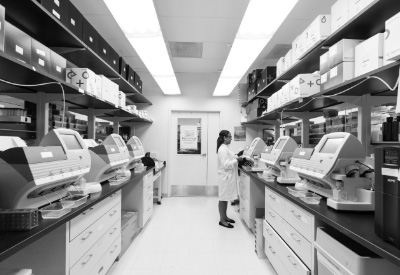
City Labs has begun operating a fully integrated loading platform under a 30 A2 possession license, enabling the controlled loading of tritium into betavoltaic devices, thermoelectric generators, and Mini-RHU heater units.
The system incorporates precision thermal-pressure control, automated safety interlocks, and real-time gas accounting to ensure uniform loading and safe handling. Qualification testing evaluated throughput, loading consistency, and multi-cycle repeatability, demonstrating performance suitable for commercial-scale production.
Enabling Persistent Power for the Next Era of Space Exploration
Taken together, the technologies City Labs will present at NETS 2026 reflect three elements needed to support future power systems in space: advanced device technologies including Mini-RHUs and betavoltaic power sources, regulatory readiness for launching tritium payloads, and scalable production infrastructure for commercial deployment.
These capabilities are essential for missions that require long-duration operation in environments where solar power or battery replacement is impractical. From distributed lunar sensor networks to deep-space instruments and persistent surface infrastructure, compact tritium power systems can extend mission lifetimes and enable new classes of space exploration technologies.
Meet City Labs at NETS 2026
Attending ANS NETS 2026 on April 27?
Connect with the City Labs team to discuss tritium micropower, lunar surface technologies, and compact betavoltaic power systems. Reach us at info@citylabs.net.