Nuclear Micropower Technologies Built on Tritium
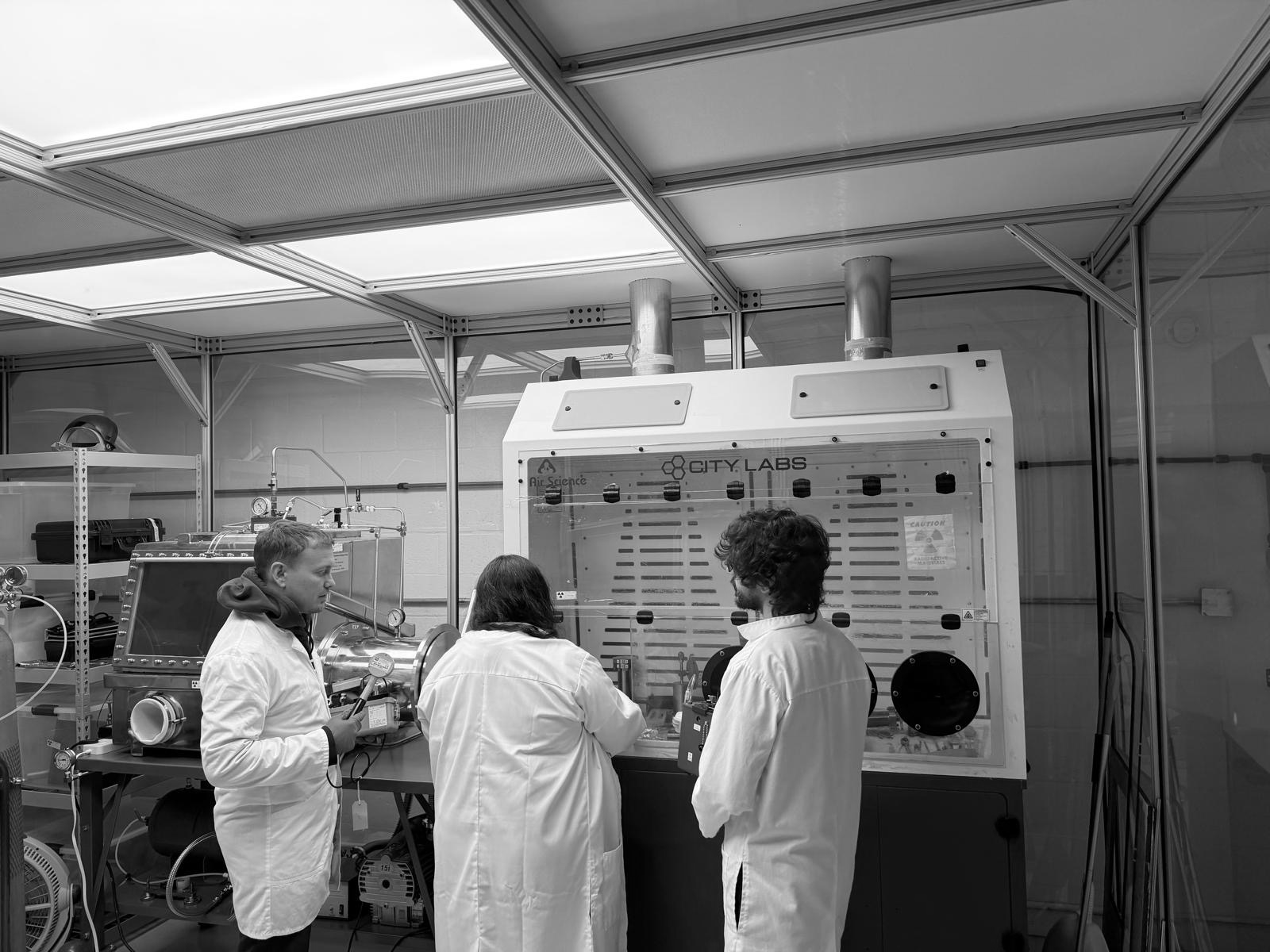
City Labs develops commercially available tritium-based nuclear power technologies for systems that require long-duration power, heat, or propulsion beyond the limits of conventional batteries and solar power.
Built around a core tritium metal hydride platform, City Labs’ technologies support betavoltaic power, radioisotope heat units, and propulsion concepts for space and other mission-critical systems.

Tritium
Tritium is a radioactive isotope of hydrogen that releases energy as it decays. Because tritium emits low-energy beta particles and has a 12.3-year half-life, it can support compact nuclear power systems designed for long-duration operation.
Core Technology
Tritium Metal Hydrides
A key advantage of the City Labs platform is the ability to store tritium in solid form within metal hydrides, also known as metal tritides. Rather than relying on compressed tritium gas, metal hydrides allow tritium to be incorporated into engineered solid-state materials.
This approach enables compact device architectures, flexible form factors, and controlled integration into multiple technology families, including betavoltaic power sources, radioisotope heat units, and propulsion concepts.
Betavoltaics
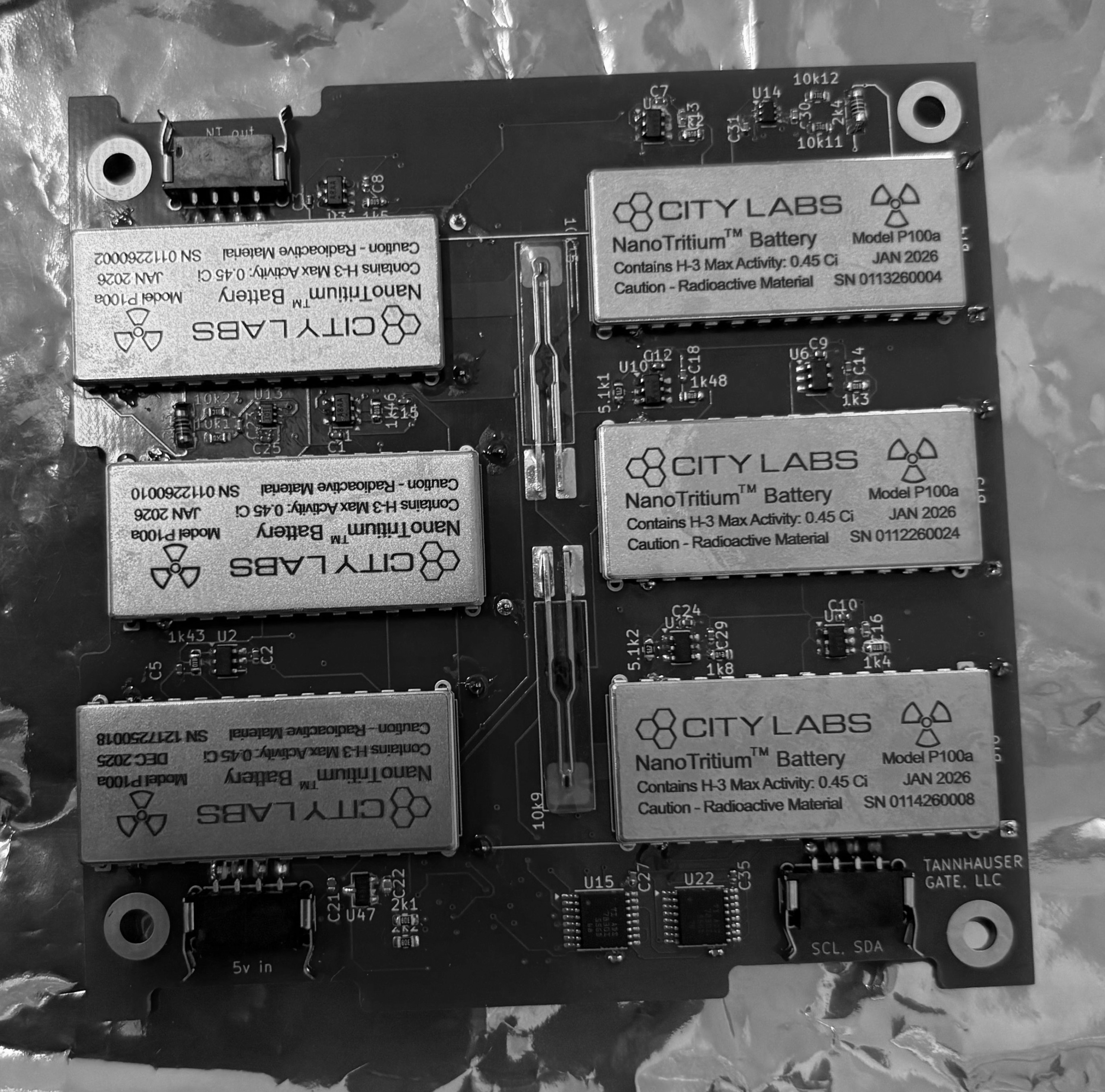
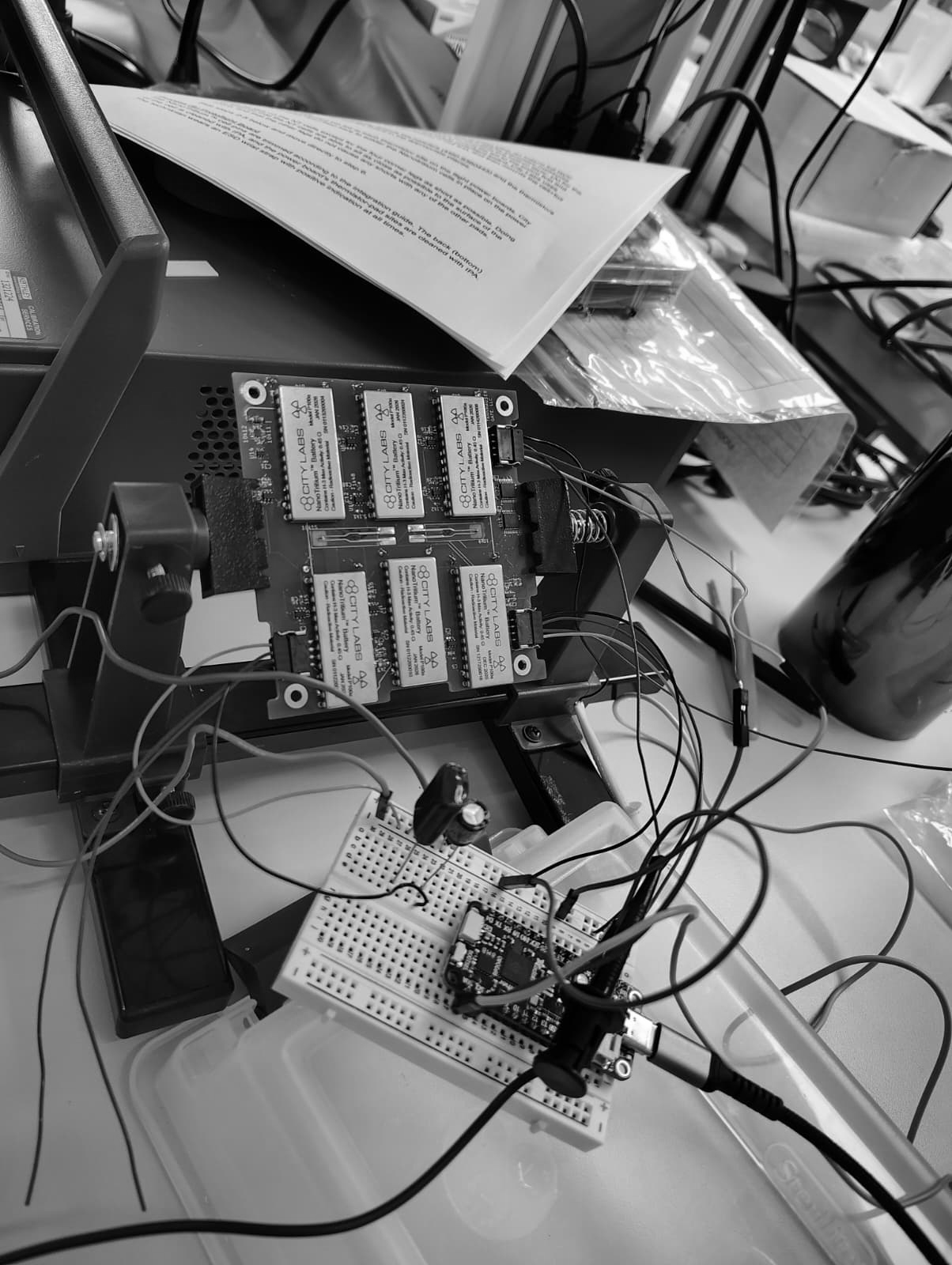
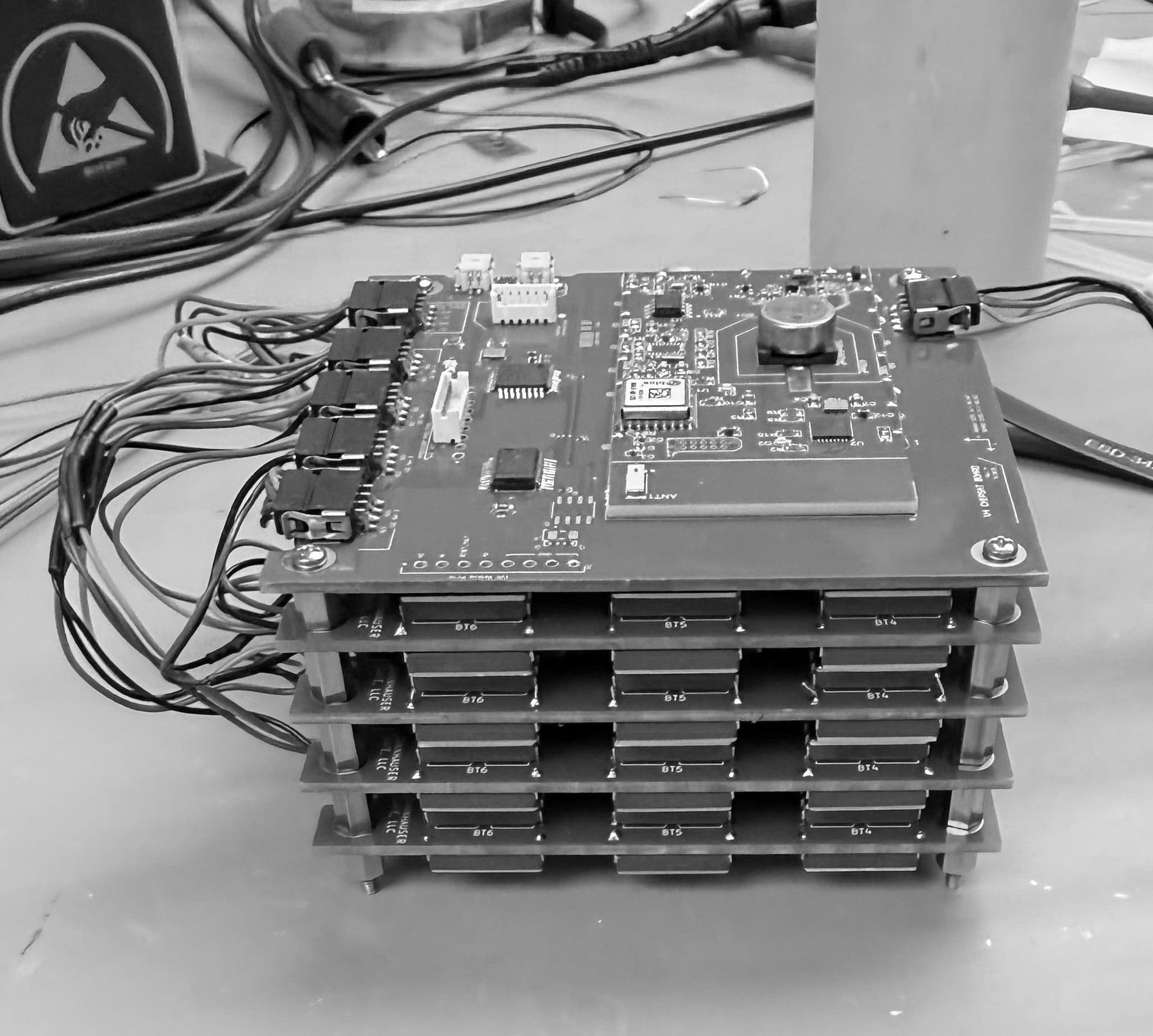
NanoTritium™ betavoltaics convert energy from tritium decay directly into electrical power. In a betavoltaic device, beta particles emitted by tritium interact with a semiconductor structure, generating electrical current.
Unlike conventional batteries, which store a finite amount of chemical energy, betavoltaics continuously generate low-level power from the natural decay of tritium. This makes them well suited for systems that require reliable, long-duration operation without charging, replacement, or routine maintenance.
City Labs develops custom NanoTritium™ betavoltaics to fit a broad range of form factor and output requirements.
Power Series Comparison
| Series | Voltage Options | Output Current | Status |
|---|---|---|---|
| P100 | 0.8V, 1.6V, 2.4V | 50–350 nA | Available |
| P200 | 0.8V, 1.6V, 2.4V | 52–156 µA | Development |
KEY ATTRIBUTES
Continuous low-level electrical output
Compact form factor
Solid-state architecture
Compatibility with ultra-low-power electronics
Long operating life
No recharge requirement
Low maintenance requirements

Radioisotope Heat Units
Many mission-critical systems do not only need electricity. They also need heat.
Radioisotope heat units use the thermal energy produced by tritium decay to provide continuous heat. Unlike battery-powered heaters, which draw from finite stored energy, tritium-based heat units generate thermal output from the natural decay of the isotope.
City Labs’ RHU work extends the company’s tritium platform beyond betavoltaic power into thermal systems built around solid-state tritium metal hydride materials.
KEY ATTRIBUTES
Continuous thermal output
Solid-state tritium source architecture
Compact form factor
Potential compatibility with future thermal-electric systems
No moving parts
Modular thermal packaging
Built on City Labs' metal hydride platform
Hybrid Thermal-Betavoltaic Systems
City Labs is also developing hybrid thermal-betavoltaic architectures that combine tritium decay heat with auxiliary electrical generation. In these systems, a single tritium source can provide passive thermal support while also generating low-level betavoltaic power.


Propulsion
Small spacecraft are often constrained by limited power, mass, and propulsion options. City Labs is developing a Beta Ion Engine concept in collaboration with the University of Michigan that uses beta emissions from tritium to support ionization and plasma-generation approaches for low-power propulsion systems.
KEY ATTRIBUTES
-
Tritium-enabled propulsion concept
-
Built on City Labs’ nuclear power platform
-
Development-stage technology
-
Intended for small-spacecraft architectures
-
Designed around low-power operating constraints

Need Long-Duration Power, Heat, or Propulsion?
City Labs works with partners developing systems that require long-duration nuclear power technologies in environments where conventional systems fall short.